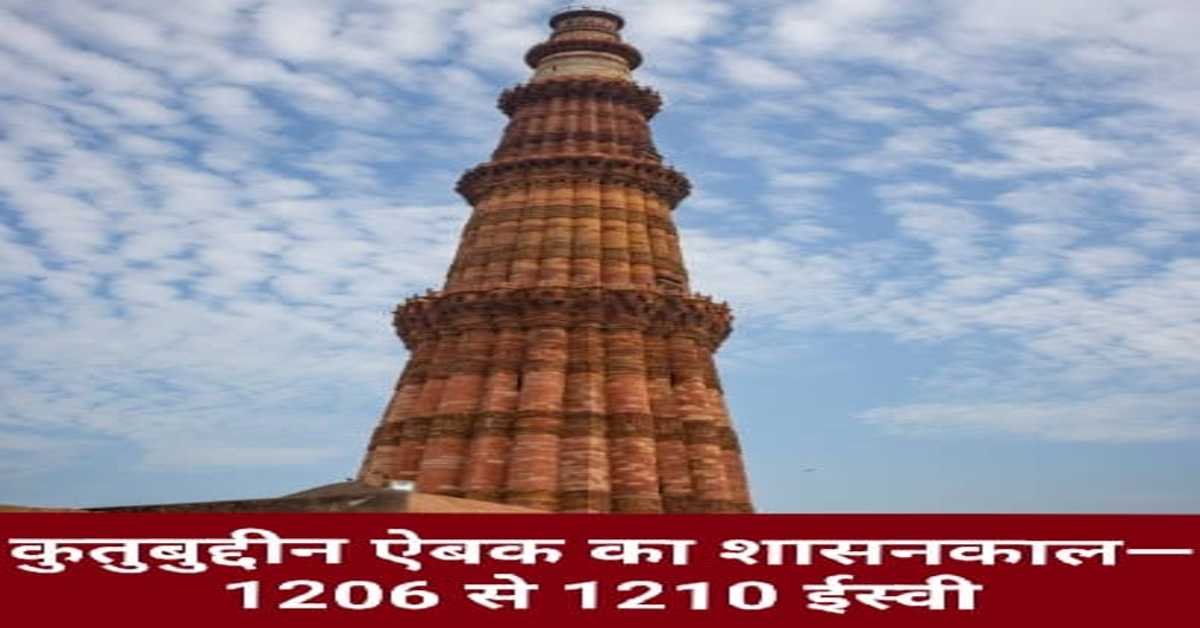
कुतुबुद्दीन ऐबक ने दिल्ली पर विजय प्राप्त की। उसने चार वर्षों तक दिल्ली पर शासन किया। उसके शासनकाल की अवधि 1206 ईस्वी से 1210 ईस्वी तक है। कुतुबुद्दीन ऐबक को उसके शासनकाल के दौरान प्रदान की गई उपाधियाँ निम्नलिखित हैं-
1. कुरानख्वाँ
2. लाख बक्श
3. पील बक्ख
4. हातिम द्वितीय।
Qutubuddin Aibak conquered Delhi. He ruled Delhi for four years. The period of his reign is from 1206 AD to 1210 AD. Following are the titles conferred on Qutbuddin Aibak during his reign-
1. Qur'ankhawan
2. Lakh Baksh
3. Peel Buck
4. Hatim II.
प्रारंभिक जीवन― कुतुबुद्दीन ऐबक 'दूरकर' नामक जनजाति से संबंधित था। 'ऐबक' एक तुर्की भाषा का शब्द है। इसका शाब्दिक अर्थ होता है- 'चंद्रमा का देवता'। ऐबक का जन्म तुर्किस्तान में हुआ था। अपने बचपन में ही वह अपने परिवार से बिछड़ गया था। ऐबक को अकेला पाकर एक व्यापारी ने उसे पकड़कर निशापुर के बाजार में बेचने के लिए लाया। वहाँ व्यापारी ने ऐबक को काजी फखरुद्दीन अब्दुल अजीज गोपी को बेच दिया। काजी ने ऐबक को गुलाम बना लिया। उस अवधि में तुर्कों में अपने गुलाम को योग्यता प्रदान करने की परंपरा थी। वे अपने गुलामों को साहित्य कला और सैनिक शिक्षा प्रदान करते थे। अतः काजी ने अपने पुत्र की भाँति ऐबक की परवरिश की तथा उसके लिए धनुर्विद्या व घुड़सवारी सीखने की सुविधा उपलब्ध करवायी।
Early Life― Qutubuddin Aibak belonged to a tribe called 'Durkar'. 'Aibak' is a Turkish word. Its literal meaning is 'God of the Moon'. Aibak was born in Turkistan. In his childhood, he was separated from his family. Finding Aibak alone, a merchant caught him and brought him to sell in the market of Nishapur. There the merchant sold Aibak to Qazi Fakhruddin Abdul Aziz Gopi. The Qazi made Aibak a slave. In that period the Turks had a tradition of qualifying their slaves. They imparted literary and military education to their slaves. Therefore, the Qazi raised Aibak like his own son and provided facilities for him to learn archery and horse riding.
कुतुबुद्दीन ऐबक बाल्यकाल से ही प्रतिभा का धनी था। उसने शीघ्र ही सभी कलाओं में कुशलता प्राप्त कर ली। उसने अत्यंत सुरीले स्वर में कुरान पढ़ना सीख लिया। इसलिए वह 'कुरानख्वाँ' के नाम से प्रसिद्ध हो गया। कुछ समय बाद काजी की मृत्यु हो गई। उसके पुत्र ने ऐबक एवं अन्य गुलामों को एक व्यापारी को बेच दिया। व्यापारी ऐबक को गजनी ले आया और बेचना चाहा। जहाँ मोहम्मद गौरी ने उसे खरीद लिया। यहीं से ऐबक के जीवन का एक नया अध्याय शुरू हुआ, जिसने अंत में उसे दिल्ली के सिहांसन पर बैठा दिया।
Qutubuddin Aibak was rich in talent since childhood. He soon acquired proficiency in all the arts. He learned to read the Quran in a very melodious voice. Hence he became famous by the name of 'Qurankhawan'. After some time the Qazi died. His son sold Aibak and other slaves to a merchant. The merchant brought Aibak to Ghazni and wanted to sell it. Where Mohammad Ghori bought it. It was from here that a new chapter in Aibak's life began, which finally made him sit on the throne of Delhi.
मोहम्मद गौरी के सहायक के रूप में ऐबक– कुतुबुद्दीन ऐबक में समस्त प्रशासनीय गुण व प्रभावित करने वाले गुण विद्यमान थे। वह गौरी के दास परिवार में सम्मिलित हो गया। इसके बाद उसने अपनी बुद्धिमानी, साहस और उदार प्रकृति से स्वामी का ध्यान अपनी ओर आकर्षित कर लिया। उसकी भक्ति, उदारता व साहस से प्रभावित होकर गौरी ने उसे 'अमीर-ए-आयुर' (शाही अश्वशाला का अधिकारी) नियुक्त किया। यह उस समय का महत्वपूर्ण पद था। इस पद पर रहते हुए ऐबक ने गौर बामियान व गजनी के युद्धों में सुल्तान की सेवा की।
Aibak as an assistant to Muhammad Ghori– Qutubuddin Aibak had all administrative qualities and influencing qualities. He joined Gauri's slave family. After this he attracted the attention of Swami with his intelligence, courage and generous nature. Impressed by his devotion, generosity and courage, Ghori appointed him 'Amir-e-Ayur' (officer of the royal escrow). This was an important post of that time. While in this post, Aibak served the Sultan in the wars of Gour Bamiyan and Ghazni.
1192 ईस्वी में तराईन के द्वितीय युद्ध में ऐबक ने कुशलतापूर्वक भाग लिया। इस युद्ध में गौरी को विजय प्राप्त हुई। तराईन के द्वितीय युद्ध के बाद गौरी ने ऐबक को भारत के विजित प्रदेशों का प्रबंधक नियुक्त किया। विजित प्रदेशों पर नियंत्रण स्थापित करने के लिए ऐबक ने 'इंद्रप्रस्थ' को अपना मुख्यालय बनाया। गौरी के वापस गजनी जाने के बाद 1192 ईस्वी में उसने अजमेर व मेरठ के विद्रोह का दमन किया। 1194 ईस्वी में उसने अजमेर के दूसरे विद्रोह का दमन किया था। इसी वर्ष 1194 ईस्वी में उसने अपने स्वामी की ओर से कन्नौज व चंदावर के युद्ध में भाग लिया। इस युद्ध में ऐबक ने महत्वपूर्ण भूमिका निभाई। इसके बाद 1197 ईस्वी में उसने गुजरात (अन्हिलवाड़) और राजस्थान को लूटा। इसके साथ ही उसने वहाँ के शासक भीमदेव को भी दंडित किया। 1202 ईस्वी के दौरान उसने बुंदेलखंड (जेजाक भुक्ति) के राजा 'परमार्दिदेव' को युद्ध में पराजित किया। इसके साथ ही उसने कालिंजर, महोबा तथा खजुराहो पर अधिकार कर लिया। 1205 ईस्वी में ऐबक ने खोक्कर के विरुद्ध युद्ध में गौरी का हाथ बटाया। वस्तुतः गौरी की योजनाओं को मूर्तरूप ऐबक ने ही प्रदान किया।
Aibak participated efficiently in the Second Battle of Tarain in 1192 AD. Gauri was victorious in this war. After the Second Battle of Tarain, Ghori appointed Aibak as the manager of the conquered territories of India. To establish control over the conquered territories, Aibak made 'Indraprastha' his headquarters. After Gauri's return to Ghazni, in 1192 AD, he suppressed the revolt of Ajmer and Meerut. In 1194 AD, he suppressed the second revolt of Ajmer. In the same year in 1194 AD, he participated in the battle of Kannauj and Chandavar on behalf of his master. Aibak played an important role in this war. After this, in 1197 AD, he plundered Gujarat (Anhilvad) and Rajasthan. Along with this, he also punished the ruler Bhimdev there. During 1202 AD he defeated the king 'Paramardideva' of Bundelkhand (Jejak Bhukti) in a battle. Along with this he captured Kalinjar, Mahoba and Khajuraho. In 1205 AD, Aibak supported Ghori in the war against Khokkar. In fact, Aibak provided the embodiment of Gauri's plans.
ऐबक दिल्ली के शासक के रूप में– मोहम्मद गौरी का कोई पुत्र नहीं था। उसे अपने कुटुंब के किसी व्यक्ति तथा गौर के किसी भी जनजाति सरदार पर विश्वास नहीं था। सल्तनत की रक्षा के लिए वह अपने दासों पर विश्वास करता था। मिनहाज-उस-सीराज के अनुसार, गौरी ने कहा था कि "अन्य सुल्तानों का एक बेटा हो सकता है या दो हो सकते हैं। मेरे हजार बेटे हैं।" अर्थात् तेरे तुर्की गुलाम मेरे बेटे हैं।ये मेरे राज्यों के उत्तराधिकारी होंगे। मेरे बाद ये सभी इन राज्यों के खुतबे में मेरा नाम सुरक्षित रखेगें– ताजुद्दीन, एल्दौज, नसरुद्दीन, कुबाचा और ऐबक। 1206 ईस्वी में गौरी की मृत्यु हो गई। संतान न होने की स्थिति में उसने किसी को भी अपना उत्तराधिकारी नहीं चुना। उस समय तीनों देशों (भारत, अफगान और तुर्की) की स्थिति एक समान थी। तीनों देशों में विस्तृत गौरी के इस साम्राज्य को आपस में बाँट लिया गया। इस बँटवारे में एल्दौज की गजनी, ताजुद्दीन को सिंध और मुल्तान तथा तीसरा सदस्य कुतुबुद्दीन ऐबक को उत्तरी भारत के प्रांत प्राप्त हुए।
Aibak as ruler of Delhi– Mohammad Ghori had no son. He did not trust any person in his family and any tribal chief of Gaur. He relied on his slaves to protect the Sultanate. According to Minhaj-us-Siraj, Ghori said that "other sultans may have one son or two. I have a thousand sons." That is, your Turkish slaves are my sons. They will be the heirs of my kingdoms. After me, all of them will preserve my name in the Khutba of these states– Tajuddin, Eldauj, Nasruddin, Qubacha and Aibak. Gauri died in 1206 AD. In the absence of children, he did not choose anyone as his successor. At that time the position of all the three countries (India, Afghan and Turkey) was similar. This empire of Gauri, which was spread in all the three countries, was divided amongst themselves. In this partition, Aldauj of Ghazni, Tajuddin got Sindh and Multan and third member Qutubuddin Aibak got the provinces of northern India.
भारत में ऐबक के राजनीतिक जीवन को तीन चरणों में बाँटा जाता है―
1. 1192 से 1206 ईस्वी तक ऐबक ने गौरी के प्रतिनिधि के रूप में उत्तरी भारत के कुछ भागों का शासन किया।
2. 1206 से 1210 ईस्वी तक उसने गौरी की भारतीय सल्तनत का मालिक बना रहा।
3. 1208 से 1210 ईस्वी तक स्वतंत्र भारतीय राज्य का सर्वसत्ताधारी रहा।
Aibak's political life in India is divided into three phases―
1. From 1192 to 1206 AD, Aibak ruled parts of northern India as the representative of Ghori.
2. From 1206 to 1210 AD, he remained the owner of the Indian Sultanate of Ghori.
3. From 1208 to 1210 AD, the independent Indian state was sovereign.
ऐबक दिल्ली के सिंहासन में– औपचारिक रूप से ऐबक 25 जून 1206 ईस्वी को गद्दी पर बैठा। किंतु उसकी सत्ता को औपचारिक मान्यता और नियुक्ति पत्र तीन वर्ष बाद मोहम्मद गौरी के वृद्ध उत्तराधिकारी तथा गजनी के शासक 'महमूद' द्वारा प्राप्त हुआ। महमूद ने ऐबक के पास सिंहासन छत्र की पताका भेजकर उसे सुल्तान की पदवी से विभूषित किया। इस प्रकार भारत में दिल्ली सल्तनत की स्वतंत्र सत्ता की स्थापना हुई। सिंहासन के आरोहण के समय ऐबक ने सुल्तान की उपाधि ग्रहण नहीं की, बल्कि मालिक (सुल्तान के अधीन) की पदवी से अपने को संतुष्ट रखा। यह पदवी उसे अपने स्वामी गौरी से प्राप्त हुई। उसने लाहौर को अपनी राजधानी लाहौर को बनाया।
Aibak on the throne of Delhi– formally ascended the throne on 25 June 1206 AD. But his formal recognition and appointment letter was received after three years by Muhammad Ghori's aged successor and Ghazni's ruler Mahmud. Mahmud sent the ensign of the throne umbrella to Aibak and decorated him with the title of Sultan. Thus the independent power of the Delhi Sultanate was established in India. At the time of his ascension to the throne, Aibak did not assume the title of Sultan, but satisfied himself with the title of Malik (under the Sultan). He received this title from his master Gauri. He made Lahore as his capital.
इन 👇एतिहासिक महत्वपूर्ण प्रकरणों को भी पढ़ें।
1. भारतीय स्वतंत्रता सेनानियों के प्रमुख नारे
2. सिंधु घाटी सभ्यता के प्रमुख स्थल एवं उनके नाम
3. सिंधु घाटी सभ्यता का नामकरण तथा नगर योजना
4. भारतीय इतिहास का 'स्वर्ण काल'
आशा है, उपरोक्त जानकारी परीक्षार्थियों के लिए ज्ञानवर्धक एवं परीक्षापयोगी होगी।
धन्यवाद।
B B Patle
edubirbal.com
टिप्पणियाँ (0)
अपनी टिप्पणी दें
इस लेख पर अभी तक कोई टिप्पणी नहीं है। सबसे पहले टिप्पणी करके चर्चा शुरू करें!