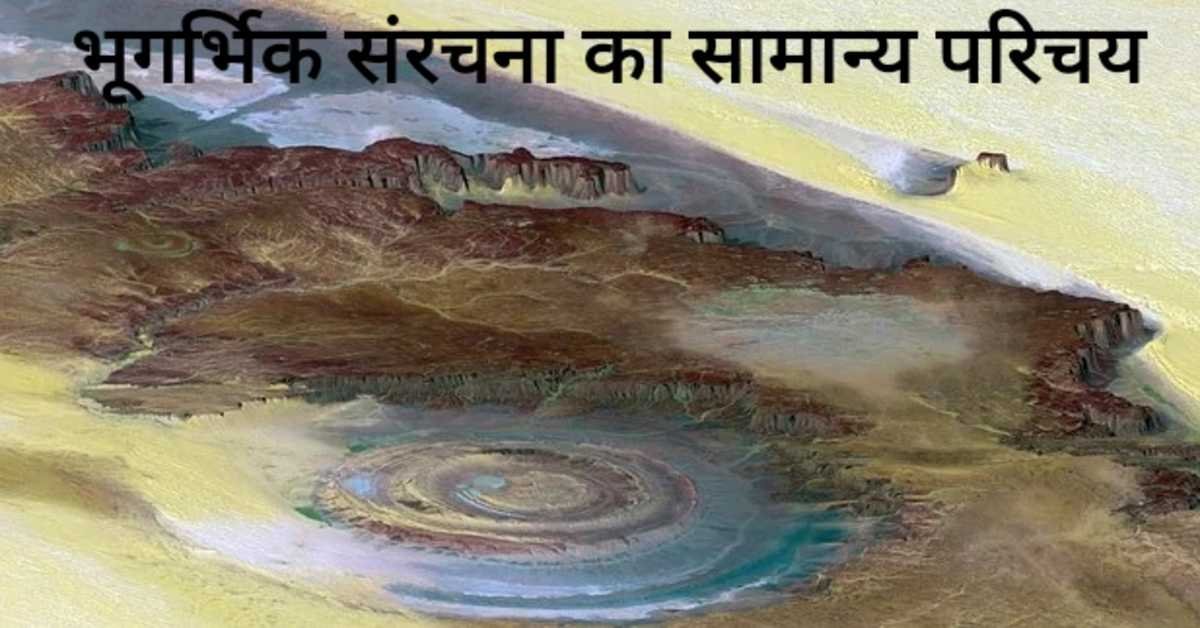
भारतीय भूगर्भिक संरचना का विकास पैंजिया के अंगारालैंड (लाॅरेशिया) तथा गोंडवानालैंड के विभाजन से प्रारंभ हुआ। समय के विभिन्न कालखंडों में गोंडवानालैंड के विभाजन तथा उसके 1 भाग के उत्तर में प्रवाह के कारण भारतीय भूगर्भिक संरचना का विकास हुआ था। भारतीय भूगर्भिक संरचना को एतिहासिक कालक्रम के अनुसार विभिन्न वर्गों में विभाजित किया जाता है। यहाँ की प्री-कैंब्रियन युगीन स्थलआकृतियों में जहाँ अरावली पर्वत, छोटानापुर पठारी क्षेत्र, विंध्यन श्रेणी आदि प्रमुख हैं, वही टर्शिययुगीन हिमालय पर्वत का विकास भारत के उत्तरी सीमांत क्षेत्र में विभिन्न उपकालखंडों में हुआ है। यहाँ प्री-कैंब्रियन आर्कियन संरचना से लेकर धारवाड़, कुडप्पा विंध्यन तथा टर्शियरीयुगीन विभिन्न भू-स्थलाकृतियों का विकास हुआ।
The development of the Indian geologic structure began with the division of Pangea into Angaraland (Laurasia) and Gondwanaland. The Indian geologic structure was developed due to the division of Gondwanaland in different periods of time and the northward flow of one part of it. The Indian geologic structure is divided into different classes according to the historical chronology. In the Pre-Cambrian era landforms, where the Aravalli Mountains, Chotanapur Plateau region, Vindhya Range etc. are prominent, the Himalayan Mountains of the Tertiary Age have developed in different sub-divisions in the northern frontier region of India. From the Pre-Cambrian Archean Formation to the Dharwad, Cuddapah Vindhya and Tertiary era, various topographies developed.
पैजिया का विभाजन तथा विभिन्न स्थलखंडों का निर्माण
गोंडवानालैंड– अफ्रीका, ऑस्ट्रेलिया, प्रायद्वीपीय भारत, दक्षिण अमेरिका, मेडागास्कर, अंटार्कटिका।
अंगारालैंड– एशिया, यूरोप, ग्रीनलैंड , उत्तरी अमेरिका।
Division of Paigea and Formation of Various Landmarks
Gondwanaland – Africa, Australia, Peninsular India, South America, Madagascar, Antarctica.
Angaraland – Asia, Europe, Greenland, North America.
भारत के भूगर्भिक संरचना ओं का समय मापक्रम
पृथ्वी के भूगर्भिक इतिहास को मुख्यतः तीन काल खंडों में विभाजित किया गया है।
1. महाकाल
2. कल्प
3. युग
Time Scale of Geologic Formations of India
Earth's geologic history is mainly divided into three periods.
1. Mahakal
2. Kalpa
3. Era
ब्रह्माण्ड एवं खगोल विज्ञान के इन 👇 प्रकरणों के बारे में भी जानें।
1. ब्रह्माण्ड की उत्पत्ति
2. खगोलीय पिण्ड
3. तारों का जन्म एवं मृत्यु
4. सौरमंडल की संरचना
5. सौरमंडल के पिण्ड
6. सौर मंडल के ग्रह एवं उपग्रह की विशेषताएँ
भारत का भूगर्भिक इतिहास अपने आप में विशिष्ट है, क्योंकि यहाँ प्राचीनतम जीवाश्म रहित आग्नेय और कायांतरित चट्टानों से लेकर नवीन जीवाश्म युक्त अवसादी चट्टानों से निर्मित संरचना का विकास हुआ है। एक और प्रायद्वीपीय भारत जो प्राचीनतम स्थलखंड पैंजिया का भाग है, में आर्कियन काल की प्राचीनतम चट्टाने पाई जाती है, तो वहीं दूसरी और मैदानी भागों में चतुर्थक काल की नवीनतम चट्टाने पाई जाती है।
The geologic history of India is unique in itself, as it has evolved from the oldest fossil-free igneous and metamorphic rocks to the new fossil-rich sedimentary rocks. In another peninsular India, which is part of the oldest landmass, Pangea, the oldest rocks of the Archean period are found, while on the other hand, the latest rocks of the Quaternary period are found in the plains.
प्री–कैंब्रियन
1. आर्कियन– कायांतरित चट्टान– अरावली पर्वतीय क्षेत्र, बुंदेलखंड का पठारी क्षेत्र
आग्नेय चट्टान– दक्षिणी पर्वती क्षेत्र
2. धारवाड़ा– जीवाश्म रहित– अरावली, छोटानागपुर, धरवाड़ा
प्राचीन अवसादी चट्टान– शिलाॅन्ग रेंज
3. कुडप्पा– चूना पत्थर से युक्त– कुडप्पा जिला (आंध्र प्रदेश), छोटानागपुर पठार, शेवराय, जेवादी (तमिलनाडु) अरावली पर्वतीय क्षेत्र
4.विंध्यन– जीवाश्म युक्त अवसादी संरचना– लाल बलुआ पत्थर, चूना पत्थर।
Pre-Cambrian
1. Archean –Metamorphic Rock – Aravalli Hills Region, Plateau Region of Bundelkhand
Igneous Rock – Southern Mountain Region
2. Dharwada – Fossilless – Aravalli, Chotanagpur, Dharwada
Ancient Sedimentary Rock – Shillong Range
3. Cuddapah – Contained with limestone – Cuddapah district (Andhra Pradesh), Chotanagpur plateau, Shevaraya, Jewadi (Tamil Nadu) Aravalli hill region
4. Vindhya –fossilized sedimentary formation – red sandstone, limestone.
अखियन–
आर्कियन संरचना का विकास आधारभूत चट्टान के रूप में होने के कारण प्रायद्वीपीय पठार का अधिकांश क्षेत्रों में यह नीचे की परतों में चले गए हैं। केवल दक्षिणी पर्वतीय क्षेत्र, बुंदेलखंड के पठार और अरावली पर्वतीय क्षेत्र में यह सतह पर नजर आते हैं। हिमालय पर्वतीय क्षेत्र की जड़ों में भी अर्कियन संरचना मिलती है। अक्रियन क्रम की चट्टानों में जीवाश्म नहीं पाए जाते। अक्रियन क्रम की चट्टानों में मुख्य रूप से कर्नाटक, आंध्र प्रदेश, मध्य प्रदेश, तमिलनाडु, छोटानागपुर का पठार, उड़ीसा, मेघालय का पठार, दक्षिण-पूर्वी राजस्थान और बुंदेलखंड में पाई जाती है। सर्वप्रथम गर्म गलित पदार्थो के शीतलीकरण (लावा, मैग्मा के रूपांतरण से) के द्वारा 'अर्कियन' संरचना का विकास हुआ, जो ग्रेनाइट और नीस चट्टान से निर्मित प्राचीनतम संरचना है।
Akhion–
Due to the development of the Archean Formation as a basic rock, it has moved into the lower layers in most areas of the Peninsular Plateau. It is visible on the surface only in the southern mountainous region, the plateau of Bundelkhand and the Aravalli mountainous region. Archean formation is also found in the roots of the Himalayan mountain region. Fossils are not found in the rocks of the Incremental order. The rocks of the Acre order are found mainly in Karnataka, Andhra Pradesh, Madhya Pradesh, Tamil Nadu, Chotanagpur plateau, Orissa, Meghalaya plateau, south-east Rajasthan and Bundelkhand. The 'Arcaean' formation, which is the oldest formation of granite and neiss rock, first developed by the cooling of hot molten material (from the transformation of lava, magma).
धारवाड़–
धारवाड़ संरचना का सर्वाधिक विकास कर्नाटक के धारवाड़ क्षेत्र में हुआ है। इसके अतिरिक्त अरावली पर्वतीय क्षेत्र, छोटानागपुर पठार क्षेत्र और मेघालय के शिलाॅन्ग रेंज में भी इसका विकास हुआ है। धात्विक और अधात्विक खनिज संसाधनों के भंडार की दृष्टि से महत्वपूर्ण होने के साथ अवसादी चट्टानों से निर्मित संरचना होने के कारण आर्थिक दृष्टि से इन का दोहन भी आसान है। भारत के धात्विक खनिज संसाधन सबसे अधिक धारवाड़ संरचना में ही पाए जाते हैं। इनमें लौह अयस्क, सोना, चांदी, अभ्रक, तांबा डोलोमाइट आदि प्रमुख हैं। भारत में धारवाड़ क्रम की चट्टाने– हिमालय के लद्दाख, जास्कर, गढ़वाल व कुमाऊँ श्रेणी में भी पाई जाती है।
Dharwad–
Most of the development of the Dharwad structure has taken place in the Dharwad region of Karnataka. Apart from this, it has also developed in the Aravalli hill region, Chotanagpur plateau region and Shillong range of Meghalaya. Along with being important from the point of view of deposits of metallic and non-metallic mineral resources, due to the structure made of sedimentary rocks, it is also easy to exploit them economically. Most of India's metallic mineral resources are found in the Dharwad formation. Among them iron ore, gold, silver, mica, copper dolomite etc. are prominent. Rocks of Dharwad order in India are also found in Ladakh, Zaskar, Garhwal and Kumaon ranges of Himalayas.
कुडप्पा–
'कुडप्पा संरचना' का सर्वाधिक विकास आंध्र प्रदेश के 'कडप्पा क्षेत्र' में हुआ है। इसके अतिरिक्त तमिलनाडु के शेवराय, जेवादी पर्वतीय क्षेत्रों, कृष्णा घाटी, पापघानी चेयार घाटी ,अरावली क्षेत्र पर्वती क्षेत्र एवं छोटानागपुर के पठार क्षेत्र में भी इस संरचना का विकास हुआ है । ये संरचना बलुआ पत्थर, चूना पत्थर और संगमरमर की चट्टानों के लिए प्रसिद्ध है। धारवाड़ चट्टानों की अपेक्षा कुडप्पा चट्टाने आर्थिक दृष्टि से कम महत्वपूर्ण हैं। इन चट्टानों से लोहा, तांबा, मेंगिनीज, रंगीन पत्थर के प्राप्त किया जाता है।
Cudappa–
The maximum development of the 'Cudappa Formation' has taken place in the 'Kadapa region' of Andhra Pradesh. Apart from this, this structure has also developed in the Shevaraya, Jewadi hill areas of Tamil Nadu, Krishna valley, Papghani Cheyar valley, Aravalli region mountain region and Chotanagpur plateau region. This formation is famous for sandstone, limestone and marble rocks. The Cuddapah Rocks are less economically important than the Dharwad Rocks. Iron, copper, manganese, colored stone are obtained from these rocks.
विंध्यान–
ये चट्टानें पूर्व में बिहार के सासाराम रोहतास क्षेत्र से लेकर पश्चिम में राजस्थान के चित्तौड़गढ़ क्षेत्र तक तथा उत्तर में आगरा से लेकर दक्षिण में मध्यप्रदेश के होशंगाबाद तक फैली हुई है। विंध्यन संरचना की अवसादी चट्टान से निर्मित संरचना है, जिसमें कहीं-कहीं जीवाश्म के भी प्रमाण मिलते हैं। साँची का स्तूप, दिल्ली का लाल किला, सिकंदर में अकबर का मकबरा तथा फतेहपुर सिकरी इत्यादि के स्थापत्य इन्हीं पत्थरों से बने हैं। पन्ना तथा गोलकुंडा की प्रसिद्ध हीरा की खानें विंध्यन क्रम की संरचना में पाई गई है। उपासना के कुडप्पा संरचना के अवसादीकारण एवं निक्षेपीकारण से 'विंध्यन संरचना' का विकास हुआ है।
Vindhya–
These rocks extend from Sasaram Rohtas region of Bihar in the east to Chittorgarh region of Rajasthan in the west and from Agra in the north to Hoshangabad in Madhya Pradesh in the south. The Vindhya Formation is a sedimentary rock formation, in which fossil evidence is also found at some places. The Stupa of Sanchi, the Red Fort of Delhi, the tomb of Akbar in Sikandar and the architecture of Fatehpur Sikri etc. are made of these stones. The famous diamond mines of Panna and Golconda have been found in the structure of Vindhya order. The 'Vindhyan Formation' has evolved from the sedimentation and deposition of the Cuddapah Formation of Upasana.
इन 👇एतिहासिक महत्वपूर्ण प्रकरणों को भी पढ़ें।
1. विश्व की प्रथम चार सभ्यताएँ- मेसोपोटामिया, मिस्र, सिंधु, और चीनी सभ्यता
2. भारत का इतिहास- प्राचीन भारतीय इतिहास के अध्ययन के पुरातात्विक स्रोत।
3. भारत का इतिहास- प्राचीन भारतीय इतिहास जानने के साहित्यिक स्त्रोत- वेद
4. भारत का इतिहास- सिंधु सभ्यता के प्रमुख स्थल
5. सिन्धु सभ्यता में जीवन
आशा है, उपरोक्त जानकारी परीक्षार्थियों के लिए ज्ञानवर्धक एवं परीक्षापयोगी होगी।
धन्यवाद।
B B Patle
edubirbal.com
टिप्पणियाँ (0)
अपनी टिप्पणी दें
इस लेख पर अभी तक कोई टिप्पणी नहीं है। सबसे पहले टिप्पणी करके चर्चा शुरू करें!