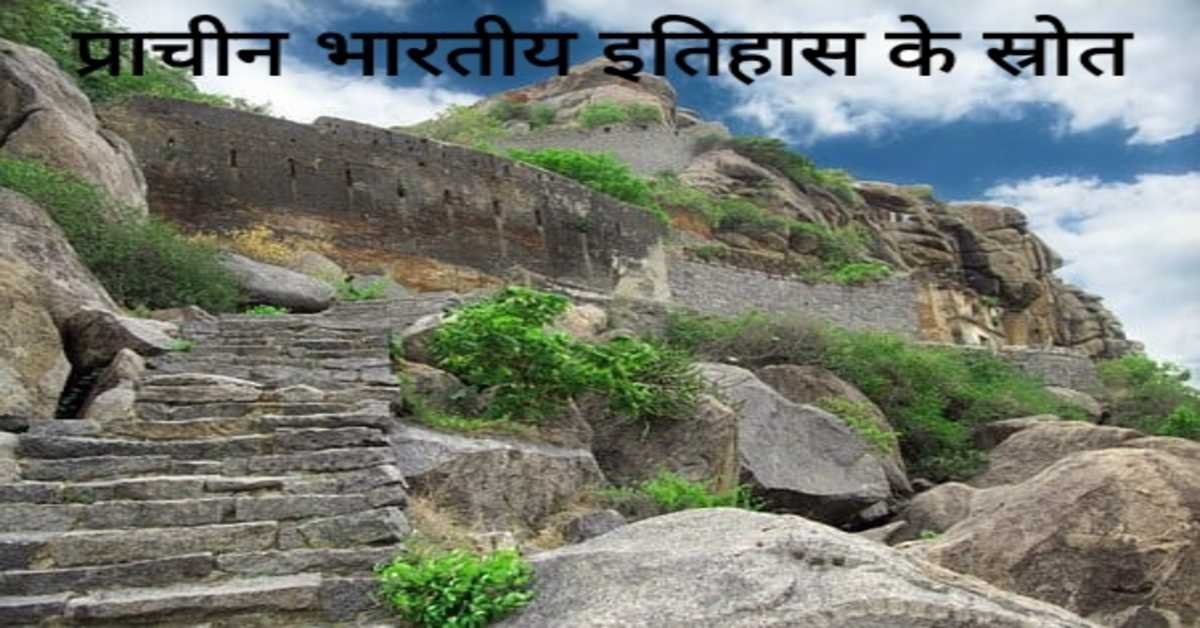
यहां मानव सभ्यता के उस समय की बात है। जब वह अपने रचना की स्थिति में था बड़े-बड़े पर्वतमाला और नदियों की जगह का प्राचीन भारत के इतिहास के शुरुआती रचना में बहुत महत्त्व रहा है। वर्तमान मानव का स्वरूप क्रमागत विकास का परिणाम है। इतिहासकारों ने पतन हेतु बहुत सरलता की नजर से इतिहास को बहुत सारे भागों में बांटा है। प्राचीन भारत उसी भाग में से एक भाग है। ऐतिहासिक कलाकार मो की जानकारी हम ऐतिहासिक इत्र स्त्रोत के आधार पर करते हैं किंतु प्राचीन इतिहास की उन बातों का प्रसार प्राप्त होता है। जो अतीत में हुई हो इसलिए महत्वपूर्ण तत्वों को चुनकर अतीत का पुनः निर्माण करने को ही इतिहास कहते हैं। यह महत्वपूर्ण तथ्य हमारे लिए बहुत रूपों में सुरक्षित है जिन्हें हम इतिहास के स्त्रोत कहते हैं।
Here's to the time of human civilization. The location of large ranges and rivers has been of great importance in the early composition of the history of ancient India when it was in its formation. Present human form is the result of gradual evolution. Historians have divided history into many parts with the view of very easy to fall. Ancient India is one part of that part. We give information about historical artist Mo on the basis of historical perfume source, but the spread of those things of ancient history is received. Whatever has happened in the past, therefore it is called history to recreate the past by selecting important elements. This important fact is preserved for us in many forms by what we call the sources of history.
प्राचीन भूतकाल में किए गए मानव प्रयास की क्रमांक से कथा है। इतिहास के प्रमुख अंग है। योग मानव प्रयास अतीत और घटनाओं का अनु क्रमिक प्रसार जो अभी वर्तमान में जीवित है। वह प्राचीन इतिहास का विषय नहीं है। और वहां वाह बहुत जल्दी अतीत होकर उनका अंग हो जाएगा जो घटना समाप्त हो चुकी है। चाहे शहर शताब्दियों पूर्व इतिहास के अंग होते है। इतिहास पुरानी घटनाओं का चिंतन करता है। जब हम पुराने समय की घटनाओं की याद करते हैं। जब हम ऐतिहासिक समय की घटनाओं का वर्णन करते हैं। तब उन्हें काल प्रसार में वितरित करते हैं। और जब भौगोलिक क्रम में उनका वर्णन करते हैं। तब उन्हें उनके स्थान के अनुसार रखते हैं। इतिहास और भूगोल दोनों कारण और परिणाम के साथ घटनाओं का समय और स्थान को व्यवस्था प्रदान करता है। अतः प्राचीन इतिहास हमारी और हमारी दशा दिशा और हमारे समाज का निश्चित करता है। और हमारे भविष्य को सुरक्षित बनाने का प्रयत्न करता है।
The story of human effort made in the ancient past is by serial number. It is a major part of history. Yoga is the human effort past and the gradual spread of events that are still alive in the present. It is not a matter of ancient history. And there Wah will very soon become a part of the past which has ended. Even if cities are part of history centuries ago. History reflects on past events. When we remember the events of old times. When we describe the events of historical time. Then distribute them in the spread of time. And when describing them in geographical order. Then place them according to their place. History and geography provide the arrangement of time and place of events with both cause and effect. Therefore, ancient history determines us and our condition, direction and our society. And tries to make our future secure.
भारत का इतिहास
पुराने भारत का इतिहास और उसके स्त्रोत के बहुत प्रकार है। हमारे इतिहास के स्त्रोत के क्षेत्र में किसी नदी के तट पर एक निर्जन टीले को खोदकर निकाले गए प्रागैतिहासिक काल के मनुष्य द्वारा पत्थर को काटकर बनाए गए भव्य इमारतों के भग्नावेश और राजकवि बाण के 'हर्षचरित्र' तक सभी प्रकार की चीजें शामिल है।
पुरातत्व साहित्य इन्हीं दो श्रेणी श्रेणियों में विभाजित करते हैं।
History of India
There are many types of history and its sources of old India. The source area of our history includes all kinds of things up to the 'Harshacharitra' of the royal poet Baan, the ruins of grand stone-cut buildings by prehistoric man excavated from a deserted mound on the bank of a river.
Archaeological literature divides these into two categories.
पुरातात्विक स्त्रोत
1. पुरातात्विक स्त्रोत भारत में सबसे पुराना अभिलेख अशोक के हैं। जो 300 ईसवी पूर्व के लगभग है। डीआर भटनागर नामक विद्वान ने केवल अभिलेखों के आधार पर ही अशोक का इतिहास लिखने का प्रयास किया है।
2. पुराने भारत के बहुत से अभिलेख पाषाण सिलाव ताम्रपत्र ओ स्तंभों दीवारों पर तथा प्रतिमा पर लिखित है।
3. बहुत ही प्राचीन लेखों में मध्य एशिया के 2 गज कोई से प्राप्त अभिलेख है। इस पर वैदिक देवताओं वर्ण इंद्र मित्र और ना तत्व के नाम मिले हैं। इससे रिंग वेद की स्थिति का ज्ञान करने में मदद मिली है।
4. अशोक के लेख खरोष्ठी यूनानी ग्राम में तथा और माइक लिपियों से मिले है। सबसे पहले 1837 ईस्वी में जेम्स प्रिसेप ने ब्राह्मी लिपि से लिखित अशोक के अभिलेख को पड़ा था गुर्जर मास की निट्टूर एवं उदय गोलम से प्राप्त अभिलेखों में अशोक के नाम का अच्छी तरह उल्लेख है। और अनेक अभिलेखों में उसे देवों का प्यार कहा गया है।
archaeological sources
1. Archaeological sources The oldest inscriptions in India are those of Ashoka. Which is around 300 BC. A scholar named DR Bhatnagar has tried to write the history of Ashoka only on the basis of inscriptions.
2. Many inscriptions of old India are written on stone silo, copper plates o pillars, walls and statues.
3. In very ancient writings, there is an inscription received from 2 yards of Central Asia. On this the names of Vedic deities Varna Indra Mitra and Na Tatva have been found. This has helped in knowing the status of Ring Veda.
4. Ashoka's writings have been found in Kharoshthi Unani village and from Mic scripts. For the first time in 1837, the inscription of Ashoka written in Brahmi script was read by James Prisep. And in many inscriptions it has been called the love of the gods.
स्मारक और भवन
1. स्मारक और भवन हड़प्पा और मोहनजोदड़ो की खुदाई से प्राप्त भवनों से 55001 पुरानी सेंधव सभ्यता का पता लगाया गया है। नई खोज के अनुसार सिंधु घाटी सभ्यता लगभग 8000 साल पुरानी है। स्मारक और भवनों से जनता की धार्मिक तथा आध्यात्मिक का ज्ञान होता है।
2. मंदिरों और महिलाओं की शायरी से वस्तु कला के विकास का पर्याप्त प्रभाव पड़ता है।
3. पुराने समय में भारत में बहुत सारे मंदिरों का निर्माण हुआ जिनके अवशेष हर जगह पूरे देश में बिखरे हुए हैं।
4. बहुत सारे स्थानों से प्राप्त मंदिर जैसे देवगढ़ का दशावतार मंदिर जो झांसी में स्थित है। भीतरगांव का मंदिर कानपुर में स्थित है। अजंता की गुफा के चित्र सुल्तानगंज से प्राप्त बुद्ध की तांबे की मूर्ति आदि से हिंदू काला एवं सभ्यता के पर्याप्त विकास होने के परिणाम मिलते हैं।
5. उत्तर भारत के मंदिर नागर शैली मध्य भारत के मंदिर बेसर शैली तथा दक्षिण भारत के मंदिर द्रविड़ शैली में स्थित है।
6. दक्षिण भारत में तंजौर का राज राजेश्वर मंदिर द्रविड़ शैली तथा उत्तर भारत में खजुराहो का कंदरिया महादेव का मंदिर नगर शैली का उदाहरण है।
7. भारत के अन्य दक्षिण पूर्व एशिया के और दीपू से हिंदू संस्कृति से संबंधित स्मारक मिलते हैं। इनमें प्रमुख रूप से जावा के बोरोबुदुर स्तूप महायान बौद्ध स्तूप तथा कांवरिया के अंकोरवाट मंदिर का वर्णन किया गया है।
Monuments and Buildings
1. Monuments and Buildings 55001 old Sendhav civilization has been unearthed from the excavations of Harappa and Mohenjodaro. According to the new discovery, the Indus Valley Civilization is about 8000 years old. The religious and spiritual knowledge of the public comes from the monuments and buildings.
2. Temples and women's poetry have a substantial impact on the development of object art.
3. Many temples were built in India in the old times, whose remains are scattered all over the country.
4. Temples obtained from many places like Dashavatar temple of Deogarh which is situated in Jhansi. The temple of Bhitargaon is located in Kanpur. The paintings of the Ajanta cave, the copper statue of Buddha found from Sultanganj, etc., are the result of the substantial development of Hindu black and civilization.
5. Temples of North India are situated in Nagara style. Temples of Central India are in Besar style and temples of South India are located in Dravidian style.
6. The Raj Rajeshwar temple of Tanjore in South India is an example of Dravidian style and the temple of Kandariya Mahadev at Khajuraho in North India is an example of Nagara style.
7. Monuments related to Hindu culture are found from India and other Southeast Asia and from Dipu. Among these, mainly Borobudur Stupa of Java, Mahayana Buddhist stupa and Angkor Wat temple of Kanwaria have been described.
सिक्के
1. प्राचीन सिक्के ताबा चांदी सोने और सीसा धातु के बने होते थे।
2. अभिलेख स्मारक और भवन के अलावा पुराने राजाओं द्वारा बनवाए गए सिक्कों से भी प्रचुर ऐतिहास की जानकारी उपलब्ध होती है।
3. बहुत सारे सिक्के मौर्योत्तर काल में बने हैं। जो प्रमुख चांदी शीशा सोना तांबा के हैं।
4. सात वाहनों ने शीशे का था गुप्त शासकों ने सोने के सर्वाधिक सिक्के जारी किए।
5. सबसे पहले सिक्कों पर लेख लिखने का कार्य जवानों ने किया।
6. समुद्रगुप्त की वीणा बजाते हुए मुद्रा वाले सिक्के से उसके संगीत प्रेमी होने का प्रमाण मिलता है।
Coins
1. Ancient coins were made of silver, gold and lead metal.
2. Inscriptions, apart from monuments and buildings, also provide abundant historical information from coins made by the old kings.
3. Many coins were made in the post-Mauryan period. The main ones are silver, glass, gold and copper.
4. Seven vehicles were made of glass. The Gupta rulers issued maximum gold coins.
5. First of all, the work of writing articles on coins was done by the soldiers.
6. The coin of Samudragupta playing the veena gives evidence of his music lover.
चित्रकला
1. बोधिसत्व पद्मपाणि का चित्र सर्वाधिक प्रसिद्ध और प्राकृतिक चित्रकारी है।
2. जो अंजिता में है। अंजिता के चित्रों में मनभावन की सुंदर झलक मिलती है।
3. चित्रकला में मां और शिशु तथा मरणासन्न राजकुमारी जैसे चित्रों से गुप्त काल की कलात्मक उन्नति का पूर्ण आभास होता है।
painting
1. The painting of Bodhisattva Padmapani is the most famous and natural painting.
2. The one who is in Anjita. Anjita's paintings give a beautiful glimpse of the pleasing.
3. Paintings like mother and child and dying princess give full impression of the artistic progress of Gupta period.
मूर्तियां
1. पुराने समय में भारतीय इतिहास में मूर्तियों का निर्माण कुषाण काल से प्रारंभ होता है।
2. कुषाण कालीन मूर्तियों पर वैदिक की दृष्टि होती है। जबकि मथुरा कला पूर्णता स्वदेशी होता है।
statues
1. In ancient times, the making of sculptures in Indian history starts from the Kushan period.
2. The idols of the Kushan period have the view of the Vedic. Whereas Mathura art is completely indigenous.
मोहरें
1. पुराने अवशेषों से प्राप्त मोहरों से प्राचीन भारत का इतिहास लिखने में बहुत सहायता मिली।
2. मोहरों से व्यापारिक आर्थिक जीवन धार्मिक के बारे में बहुत सी जानकारी प्राप्त होती है।
3. मोहनजोदड़ो और प्रसारण हड़प्पा से प्राप्त मिट्टी की मोहरों से बने धार्मिक प्रतीकों से उनकी धार्मिक अवस्थितिओं का ज्ञान होता है।
Pieces
1. Seals obtained from old remains helped a lot in writing the history of ancient India.
2. A lot of information is obtained from the seals about the business, economic life, religious.
3. Religious symbols made of clay seals obtained from Mohenjodaro and Prasar Harappa give knowledge of their religious locations.
साहित्यिक स्त्रोत
1. साहित्य के स्त्रोत के अंदर हम धार्मिक साहित्य और लौकिक साहित्य की जानकारी लेते हैं।
2. धार्मिक साहित्य में ब्राह्मण और ब्राह्मण ग्रंथों की चर्चा की जाती है।
3. ब्राह्मण ग्रंथों में उपस्थित वेद महाभारत रामायण पुराण स्मृति ग्रंथ आते हैं।
4. परंतु ब्राह्मणेत्तर ग्रंथों में बौद्ध जैन साहित्य के अंतर्गत रचनाओं का वर्णन किया गया है।
5. लौकिक साहित्य में ऐतिहासिक ग्रंथों, यात्रा-वृत्तांत, जीवनियों, कल्पना प्रधान तथा गल्फ साहित्य का वर्णन किया गया है।
इन के अंतर्गत अलग-अलग विवरण निम्न प्रकार के हैं।
Literary Source
1. Within the source of literature, we take information about religious literature and secular literature.
2. Brahman and Brahman texts are discussed in religious literature.
3. The Vedas, Mahabharata, Ramayana, Purana, Smriti texts present in Brahmin texts come.
4. But in the non-Brahmin texts, the compositions have been described under Buddhist Jain literature.
5. In the secular literature, historical texts, travelogues, biographies, fantasy and Gulf literature have been described.
The different details under these are as follows.
ब्राम्हण साहित्य
वेद
1. वेदों के अनुसार पुराने ऑडियो के सामाजिक धार्मिक एवं राजनीतिक तथा आर्थिक जीवन के बारे में बहुत सारी जानकारी मिली है।
2. वैदिक युग की सांस्कृतिक 10 साल के ज्ञान का एकमात्र स्त्रोत वेद है। वेदों की संख्या 4 होती है।
ऋग्वेद यजुर्वेद सामवेद तथा अर्थ वेद।
Brahmin Literature
Vedas
1. According to the Vedas, a lot of information has been found about the social, religious and political and economic life of the old audio.
2. The only source of 10 years' cultural knowledge of the Vedic age is the Vedas. The number of Vedas is 4.
Rigveda, Yajurveda, Samveda and Artha Veda.
महाकाव्य
1. महाभारत की रचना वेदव्यास जी ने किया था। इसे पुराने भारतवर्ष की सामाजिक धार्मिक तथा राजनीतिक दशा का पता लगाया जा सकता है।
2. इतिहास की दृष्टि से देखा जाए तो महाकाव्यों को विशेष महत्व नहीं दिया जाता क्योंकि इससे वर्णित कथाओं में कल्पना का समावेश अधिक होता है।
3. रामायण हमारा आदिकाव्य है। महर्षि बाल्मीकि ने रामायण की रचना की थी इसमें हमने हिंदुओं तथा यह वनों और संघ को से संघर्ष का वर्णन मिला है।
4. वैदिक साहित्य के बाद भारतीय इतिहास में महाकाव्यों का समय आया है। इसमें रामायण और महाभारत महाकाव्य का प्रमुख वर्णन शामिल है।
Epic
1. The Mahabharata was composed by Ved Vyas ji. It can be traced to the socio-religious and political condition of old India.
2. If seen from the point of view of history, epics are not given special importance because they involve more imagination in the stories described.
3. Ramayana is our epic poem. Maharishi Valmiki composed the Ramayana, in this we have got a description of the struggle between the Hindus and the forests and the Sangha.
4. After Vedic literature, the time of epics has come in Indian history. It contains major narrations of the epic Ramayana and Mahabharata.
पुराण
1. पुराणों में मत्स्य पुराण का सबसे पुराना एवं प्रामाणिक है।
2. पुराणों की रचयिता एवं संकलनकर्ता लोग हर्ष तथा उनके पुत्र अग्रवा को माना जाता है।
3. पुराणों की संख्या 18 है।
4. पुराणों में प्राचीन भारतीय इतिहास का अच्छा क्रमबद्ध वर्णन मिलता है।
Purana
1. Among the Puranas, Matsya Purana is the oldest and most authentic.
2. The authors and compilers of the Puranas are considered to be Harsha and his son Agrava.
3. The number of Puranas is 18.
4. A good systematic description of ancient Indian history is found in the Puranas.
इन 👇 प्रकरणों के बारे में भी पढ़ें।
1. covid-19 महामारी से संबंधित महत्वपूर्ण तथ्य
2. भारत के प्रमुख पर्यटन स्थलों की सूची
3. विश्व के प्रमुख संगठन और उनके मुख्यालय
आशा है, उपरोक्त जानकारी परीक्षार्थियों के लिए ज्ञानवर्धक एवं परीक्षापयोगी होगी।
धन्यवाद।
B B Patle
edubirbal.com
टिप्पणियाँ (0)
अपनी टिप्पणी दें
इस लेख पर अभी तक कोई टिप्पणी नहीं है। सबसे पहले टिप्पणी करके चर्चा शुरू करें!