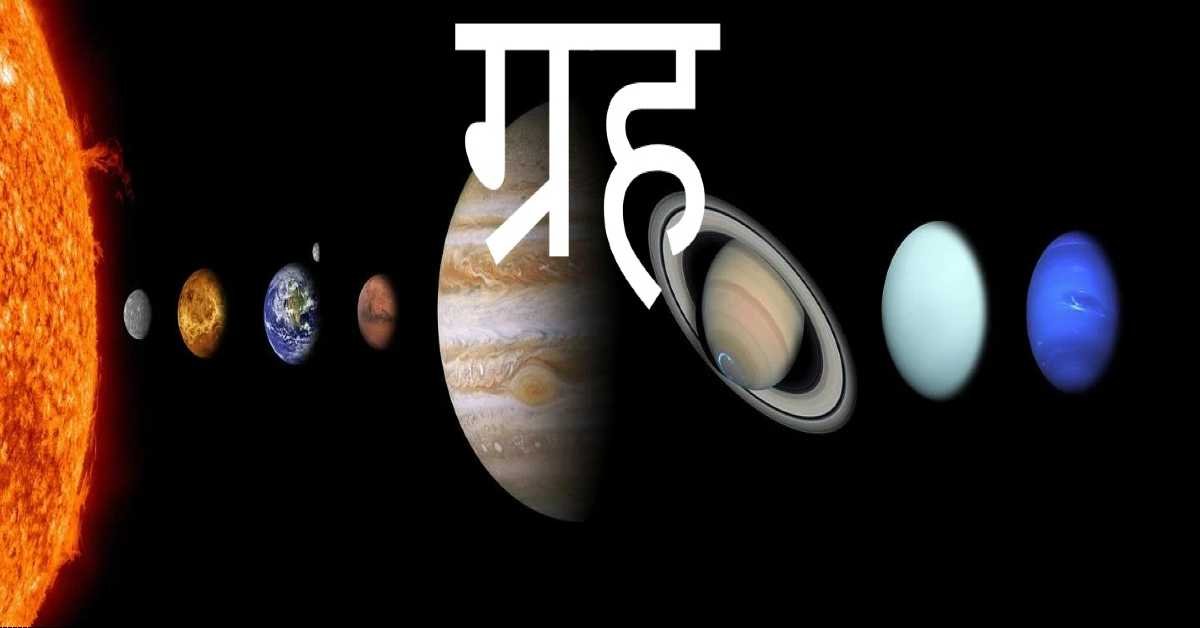
ग्रह
पृथ्वी के समान ही सूर्य की परिक्रमा करने वाले प्रकाशहीन आकाशीय पिण्ड ग्रह कहलाते हैं। वर्तमान में सौरमण्डल में कुल आठ ग्रह क्रमश–
1. बुध
2. शुक्र
3. पृथ्वी
4. मंगल
5. बृहस्पति
6. शनि
7. अरुण
8. वरुण।
Planet
Lightless celestial bodies revolving around the Sun like Earth are called planets. At present there are eight planets in the solar system respectively –
1. Mercury
2. Venus
3. Earth
4. Mars
5. Jupiter
6. Saturn
7. Arun
8. Varun.
1. बुध
बुध सूर्य के सबसे नजदीक स्थित तथा सौरमण्डल का सबसे छोटा ग्रह है। इसका तापान्तर अन्य ग्रहों की अपेक्षा सर्वाधिक है। इसका द्रव्यमान पृथ्वी के द्रव्यमान का 1/8 है। यह प्रातः एवं सायं के तारे के रूप में वर्ष में तीन बार दिखाई देता है। इसका कोई भी उपग्रह नहीं है।
1. Mercury
Mercury is the closest planet to the Sun and the smallest planet in the Solar System. Its temperature difference is the highest compared to other planets. Its mass is 1/8 of the mass of the Earth. It is visible thrice a year in the form of morning and evening stars. It doesn't have any satellites.
2. शुक्र
1. शुक्र को भोर एवं संध्या का तारा कहते हैं। इसका कोई भी प्राकृतिक उपग्रह नहीं है। इसकी परिक्रमण गति विपरीत दिशा में होती है।
2. बुध के बाद शुक्र सूर्य से दूसरा निकटतम ग्रह है। इसे पृथ्वी की बहन कहा जाता है। यह सबसे चमकीला ग्रह है। यह अपने चारों ओर 3/4 घने बादलों से युक्त वायुमण्डल के प्रकाश के लगभग भाग को परावर्तित कर देता है।
2. Venus
1. Venus is called the morning and evening star. It does not have any natural satellites. Its rotation speed is in the opposite direction.
2. After Mercury, Venus is the second closest planet to the Sun. It is called the sister of the earth. It is the brightest planet. It reflects almost part of the light of the atmosphere consisting of 3/4 of the dense clouds around it.
3.पृथ्वी
1. यह सूर्य से दूरी के अनुसार तीसरा, जबकि आकार में पाँचवाँ बड़ा ग्रह है। यह अपने अक्ष पर 1610 किमी प्रति घण्टे की चाल से 23 घण्टे 56 मिनट और 4 सेकेण्ड में एक पूरा चक्कर लगाती है।
2. पृथ्वी की गति दो प्रकार की होती है। घूर्णन एवं परिक्रमण
पृथ्वी का अपने अक्ष पर घूमना घूर्णन कहलाता है, जबकि सूर्य के चारों ओर एक स्थित कक्ष में पृथ्वी की गति को परिक्रमण कहते हैं। इन दोनों गतियों के कारण दिन-रात एवं ऋतु परिवर्तन होते हैं। ऋतु परिवर्तन में पृथ्वी का अपने अक्षों में झुकाव भी एक प्रमुख कारण है।
3. सौरमण्डल के सभी ग्रहों एवं उपग्रहों पर ज्ञात जीवन के विषय में पृथ्वी एकमात्र ग्रह है, जहाँ जीवन है। यह अपने अक्ष पर पश्चिम से पूर्व की ओर घूमती है। इसका एकमात्र उपग्रह चन्द्रमा है। पृथ्वी का रंग आकाश से नीला दिखाई पड़ता है।
3.earth
1. It is the third in terms of distance from the Sun, while the fifth largest planet in size. It makes a complete revolution on its axis in 23 hours 56 minutes and 4 seconds at a speed of 1610 km/h.
2. There are two types of motion of the earth. rotation and rotation The rotation of the earth on its axis is called rotation, whereas the movement of the earth in an orbit around the sun is called revolution. Due to these two movements, there is change of day, night and season. The tilt of the earth in its axes is also a major reason for the change of seasons.
3. Earth is the only planet, where there is life, about the known life on all the planets and satellites of the solar system. It rotates on its axis from west to east. Its only satellite is the Moon. The color of the earth appears blue from the sky.
4. मंगल
1. मंगल लाल-ग्रह के नाम से प्रसिद्ध है। इसके दो उपग्रह हैं-फोबोस तथा डीमोस
2. इस ग्रह का सबसे ऊँचा पर्वत निक्स ओलम्पिया है, जो एवरेस्ट से तीन गुना ऊँचा है। यह अपनी धुरी पर लगभग पृथ्वी की घूर्णन गति के बराबर घूमता है।
4. Mars
1. Mars is famous as red-planet. It has two satellites - Phobos and Deimos
2. The highest mountain on this planet is Nix Olympia, which is three times higher than Everest. It rotates on its axis approximately equal to the rotational speed of the Earth.
5. बृहस्पति
1. सूर्य से पाँचवाँ निकटतम परन्तु सबसे बड़ा ग्रह है। बृहस्पति
मुख्यतः हाइड्रोजन एवं हीलियम का बना है, जो सौरमण्डल के शेष समस्त ग्रहों के सम्मिलित द्रव्यमान से 2.5 गुना अधिक द्रव्यमान वाला है।
2. यह सूर्य से जितनी मात्रा में ऊर्जा ग्रहण (अवशोषित) करता
है, उससे अधिक मात्रा में विकरित करता है। इसका
वायुमण्डलीय दबाव पृथ्वी के वायुमण्डलीय दबाव से एक
करोड़ गुना अधिक है। इसके वायुमण्डल में तीव्र, संवहन
हवाएँ चलती हैं।
3. बृहस्पति के ज्ञात उपग्रहों में गैनीमिड, कैलिस्टो, इयो एवं
यूरोपा है। गैनीमिड सौरमण्डल का सबसे बड़ा उपग्रह, जो
आकार बुध से भी बड़ा है। बृहस्पति का पलायन वेग (59.64 किमी/सेकेण्ड) सर्वाधिक है।
5. Jupiter
1. The fifth closest but largest planet to the Sun. Jupiter It is mainly composed of hydrogen and helium, which is 2.5 times more than the combined mass of all the remaining planets of the solar system.
2. The amount of energy it absorbs (absorbs) from the Sun It radiates more than that. Its
Atmospheric pressure one less than Earth's atmospheric pressure million times more. rapid, convection in its atmosphere
The winds blow.
3. Known satellites of Jupiter include Ganymede, Callisto, Io and
It's Europa. Ganymede is the largest satellite in the solar system
The size is larger than that of Mercury. Jupiter has the highest escape velocity (59.64 km/s).
6. शनि
1. शनि आकार में दूसरा सबसे बड़ा ग्रह है। यह आकाश में पीले तारे के समान नजर आता है। इसके उपग्रहों की संख्या 62 है। टाइटन इसका प्रमुख उपग्रह है। इस पर नाइट्रोजन युक्त वायुमण्डल है।
6. Saturn
1. Saturn is the second largest planet in size. It looks like a yellow star in the sky. The number of its satellites is 62. Titan is its main satellite. It has a nitrogen-rich atmosphere.
7.अरुण
1. अरुण के ज्ञात उपग्रहों की संख्या 27 है, जिसमें टाइटेनिया
सबसे बड़ा उपग्रह है। साथ-ही-साथ ओवेरॉन, उपब्रियल,
एरियल एवं मिराण्डा इसके बड़े-बड़े उपग्रह हैं।
2. 1781 ई. में विलियन हरशेल ने अरुण की खोज की थी। यह आकार में तीसरा बड़ा एवं सूर्य से सातवाँ निकटतम ग्रह है। यह एकमात्र ऐसा ग्रह है, जो सूर्य की प्रदक्षिणा एक ध्रुव से दूसरे ध्रुव की ओर करता है। अत: इसे लेटा हुआ ग्रह भी कहते हैं। इसका वायुमण्डल घना है, जिसमें हाइड्रोजन, हीलियम, मीथेन एवं अमोनिया गैस मिलती है।
7.arun
1. The number of known satellites of Uranus is 27, including Titania
It is the largest satellite. Simultaneously Overon, Subbriel,
Ariel and Miranda are its big satellites.
2. Arun was discovered by William Herschel in 1781 AD. It is the third largest in size and the seventh closest planet to the Sun. It is the only planet that rotates the Sun from one pole to another. Hence it is also called recumbent planet. Its atmosphere is dense, in which hydrogen, helium, methane and ammonia gas are found.
8.वरुण
1. 1846 ई. में जोहान गाले ने इसकी खोज की। वरुण सौरमण्डल का चौथा सबसे बड़ा उपग्रह है। इसके भी चारों ओर वलय मिलते हैं तथा वलय सिलिकेट या कार्बन आधारित तत्त्वों से बना है। इसके वायुमण्डल में 80% हाइड्रोजन एवं 19% हीलियम है, साथ ही साथ मीथेन की उपस्थिति भी है। इसका उपग्रह टाइटन पृथ्वी के चन्द्रमा से बड़ा एवं वरुण की सतह से अधिक निकट है।
8.Varun
1. It was discovered by Johann Galle in 1846 AD. Varuna is the fourth largest satellite of the Solar System. Rings are found around it too and the ring is made of silicate or carbon based elements. Its atmosphere is 80% hydrogen and 19% helium, as well as the presence of methane. Its satellite Titan is larger than Earth's moon and closer to the surface of Varuna.
9.चन्द्रमा
1. 21 जुलाई, 1969 को नील आर्मस्ट्रॉग एवं सर एडविन एल्ड्रिन विश्व के पहले व्यक्ति बने, जिन्होंने चन्द्रमा की सतह पर अपने कदम रखे। ये अपोलो-11 नामक अन्तरिक्ष यान में गए थे।
2. चन्द्रमा पृथ्वी का एकमात्र उपग्रह है और यह पृथ्वी के चारों ओर दीर्घवृत्तीय कक्षा में चक्कर लगाता है।
3. चन्द्रमा का अपना प्रकाश नहीं होता, किन्तु यह सूर्य के प्रकाश से चमकता है, चन्द्रमा पर वायुमण्डल नहीं है, क्योंकि इसकी गुरुत्वाकर्षण शक्ति गैसों को बनाए रखने में असमर्थ है।
9.moon
1. On July 21, 1969, Neil Armstrong and Sir Edwin Aldrin became the first people in the world to set foot on the surface of the Moon. They went to the spacecraft named Apollo-11.
2. The moon is the only satellite of the earth and it revolves around the earth in an elliptical orbit.
3. The moon does not have its own light, but it shines with sunlight, the moon does not have an atmosphere, because its gravitational force is unable to retain gases.
आशा है, उपरोक्त जानकारी परीक्षार्थियों के लिए ज्ञानवर्धक एवं परीक्षापयोगी होगी।
धन्यवाद।
B B Patle
edubirbal.com
टिप्पणियाँ (0)
अपनी टिप्पणी दें
इस लेख पर अभी तक कोई टिप्पणी नहीं है। सबसे पहले टिप्पणी करके चर्चा शुरू करें!